The Women’s Health Initiative
How One Study Reshaped Women’s Health, and Why It Still Matters
When hormone therapy comes up, the same question still follows: “Didn’t hormones cause cancer?”
That fear traces back to July 2002, when the first major results from the Women’s Health Initiative (WHI) were released. I was practicing full-time, and for months women came into my office with the same question: “What do I do now?”
The story now has a new chapter. In November 2025, the FDA announced it would remove the boxed warnings about cardiovascular disease, breast cancer, and probable dementia that had been on hormone therapy labels since 2003. The first revised labels were approved in February 2026. It is a good time to look back at how we got here.
Before the WHI: Premarin and Prempro
For decades, the most prescribed hormone therapy in the United States was Premarin. The name gives away its source: PREgnant MARes’ urINe. Estrogens were extracted from the urine of pregnant horses and sold as a treatment for menopausal symptoms.
Premarin is not identical to human estrogen. It is a blend of horse estrogens, several of which the human body does not make at all.
Prempro came next. It paired Premarin with medroxyprogesterone acetate, a synthetic progestin. The progestin was there to protect the lining of the uterus, because estrogen alone raises the risk of uterine cancer in women who still have a uterus. Prempro is the combination the WHI went on to test.
Bioidentical and Synthetic
Bioidentical hormones have the same molecular structure as the hormones the body makes. Estradiol and progesterone are the two most often discussed.
Synthetic hormones are chemically altered versions. Medroxyprogesterone acetate acts on some of the same receptors as progesterone, but it is a different molecule.
Why alter a molecule that already works? Part of the answer is patents. A molecule that exists in nature generally cannot be patented on its own, and a modified one can. That is how the years and expense of drug development get paid for.
A molecule that looks different to a chemist can also look different to a cell. Small structural changes can shift how the body responds, which is why the WHI results need careful reading.
What the WHI Actually Tested
The WHI enrolled tens of thousands of women. The combined hormone arm tested one regimen, Prempro, in women who were on average:
- 63 years old
- More than a decade past menopause
- Often already carrying cardiovascular risk factors
Many of them were starting hormones long after the point when most women first consider them.
In July 2002, researchers stopped the Prempro arm early. Women taking it had more breast cancer, heart attacks, strokes, and blood clots than women taking a placebo. They also had fewer hip fractures and fewer colorectal cancers, which rarely made the news.
In absolute terms, the differences were small. For every 10,000 women taking Prempro for a year, there were about 8 more breast cancers, 7 more heart events, 8 more strokes, and 8 more blood clots in the lungs, along with about 6 fewer colorectal cancers and 5 fewer hip fractures.
The headlines reduced all of it to three words: hormones cause cancer. Women who had been stable on hormone therapy for years stopped overnight. Prescriptions for Premarin and Prempro dropped sharply within months, and mainstream medicine largely stepped away from hormone therapy.
The Vacuum
Hot flashes, insomnia, bone loss, weight gain, and brain fog did not go away because a study made headlines. Women still needed help.
Many turned to compounding pharmacies and to health care practitioners who worked with bioidentical estradiol and progesterone, individualized dosing, and careful timing. Compounded bioidentical hormones existed before 2002, but demand surged after the WHI, and bioidentical hormone therapy moved from the edges of medicine toward the mainstream.
Bioidentical does not have to mean compounded. FDA-approved bioidentical estradiol and micronized progesterone are available by prescription at regular pharmacies. Compounded versions are custom-made and are not FDA approved, so quality and consistency depend on the pharmacy. Each route has trade-offs.
The Correction
Over the next two decades, researchers kept analyzing the WHI data and running new studies. Four findings stand out.
- Estrogen alone looked different. The WHI also tested Premarin by itself in women who had had a hysterectomy. With long-term follow-up, that group had fewer breast cancer diagnoses than the placebo group. That points to the synthetic progestin in Prempro as a major factor in the breast cancer signal. Estrogen alone still raised the risk of stroke and blood clots.
- Timing matters. Women who started hormones before age 60, or within about ten years of menopause, had a more favorable overall risk profile than women who started later. This is often called the timing hypothesis.
- Route matters. Estrogen taken by mouth passes through the liver first. Patches and gels skip that step, and studies suggest they carry a lower risk of blood clots than pills.
- The type of progestogen may matter. Observational studies, including a large French cohort, suggest micronized progesterone may carry less breast cancer risk than synthetic progestins. No large randomized trial has confirmed it, so it remains a strong signal that is not yet settled.
For years these findings stayed mostly in medical journals. The public remembered the panic.
That changed in late 2025, when the FDA, after reviewing the WHI and the research that followed, moved to take the warnings about cardiovascular disease, breast cancer, and probable dementia off menopausal hormone therapy labels. One boxed warning stays: estrogen taken without a progestogen by women who still have a uterus raises the risk of uterine cancer. That risk is real, and adding a progestogen reduces it.
Why It Still Matters
What the WHI showed was narrow. One oral combination, horse estrogens plus a synthetic progestin, carried risks when started in women who were on average more than a decade past menopause. The study never tested bioidentical hormones, estrogen patches or gels, or women starting near menopause.
The headline was far broader than the finding, and many women have gone without help they might have benefited from because of it. Hormone therapy is not right for everyone. The decision deserves to be made on today’s evidence.
Discuss hormone replacement therapy with your healthcare provider and use this information to find what works for you.
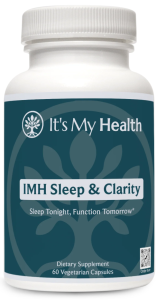
A Note on SleepDisrupted sleep is one of the most common complaints women bring up in midlife. If sleep is on your list, IMH Sleep & Clarity, from our own line, is designed to support sleep quality and next-day cognitive function.*
A Companion Piece
For what hormones actually do and why balance matters, Dr. Tanya Atagi’s companion article, “Hormones Explained: A Guide to Balance and Midlife Vitality,” picks up where this history leaves off.

Authored by Gerard Guillory, MD
Gerard Guillory, MD, is a board-certified internist who practiced for nearly four decades with a focus on functional, root-cause medicine. He is the author of three books on irritable bowel syndrome and the founder of It’s My Health, where he and his team put current health news in context and help members understand the underlying causes of chronic symptoms.
Get the next IMH Perspective in your inbox.
* These statements have not been evaluated by the Food and Drug Administration. This product is not intended to diagnose, treat, cure, or prevent any disease.