Smoke, ozone, and the mask myth: what actually protects you on a bad air day
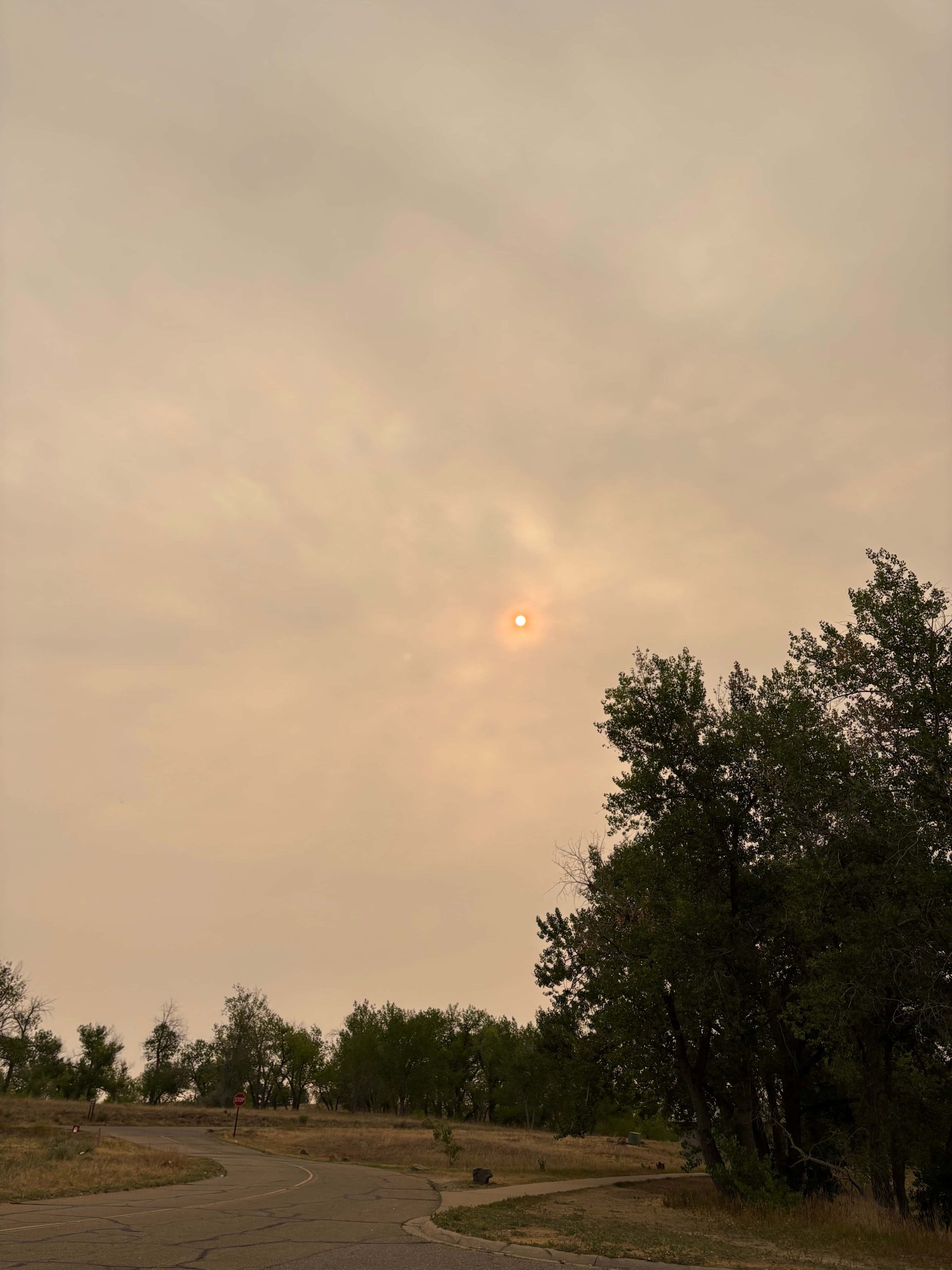
If the sun has looked strange this week, dull and orange under an otherwise clear sky, that’s wildfire smoke. Colorado has several fires burning, and smoke from hundreds of fires across Canada is being carried south on upper-level winds and layering on top of what we already have. State health officials issued a wildfire smoke advisory this week for parts of the Front Range and the northern mountains.
What Happened on My Bike Ride
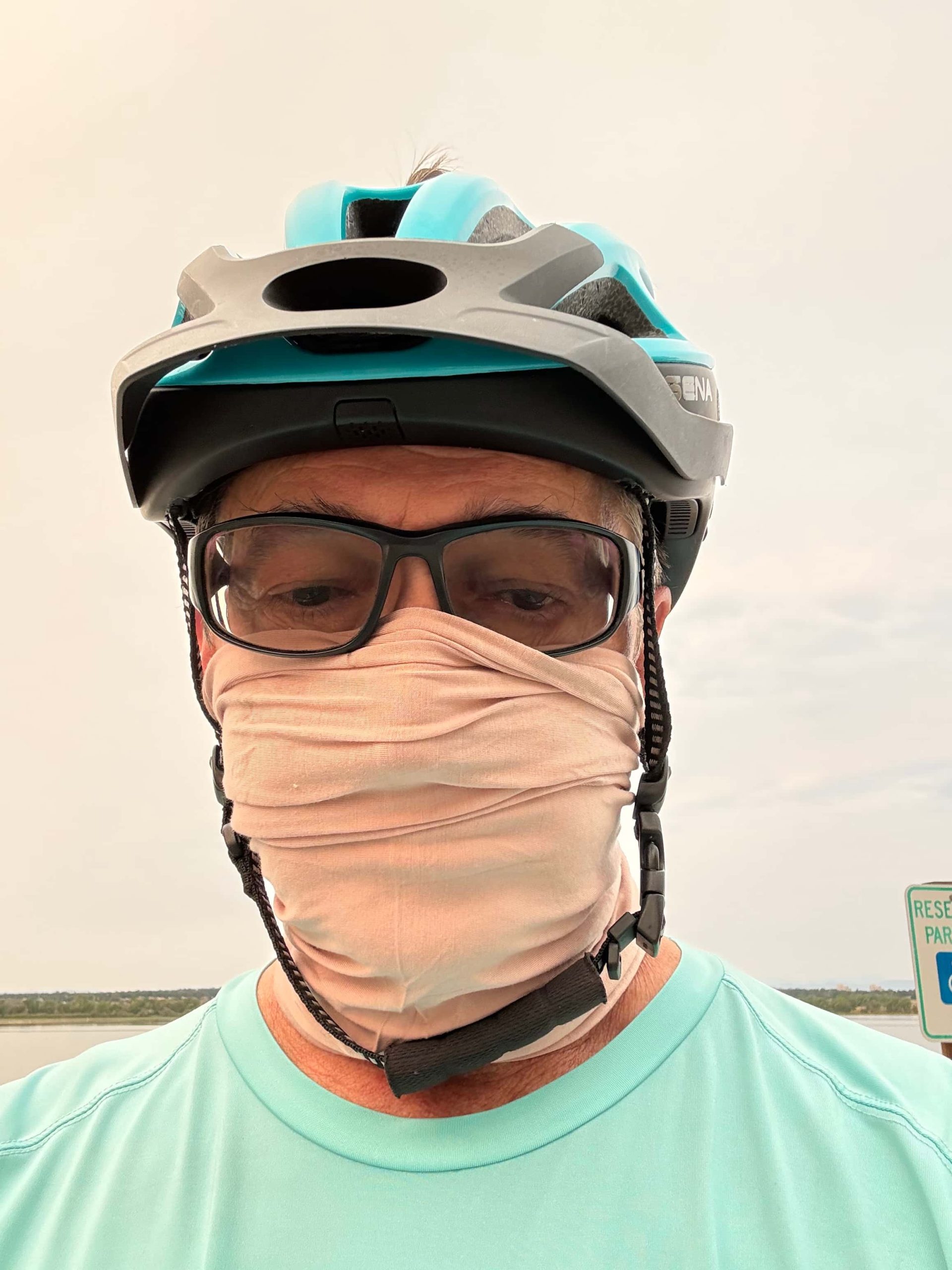
I ride around Cherry Creek Reservoir most mornings. This morning the air quality index was 50 when I started, which is in the “good” range. An hour later, when I finished, it was 85. An hour or two after that it was over 160, which is “unhealthy.” The whole thing happened inside about three hours.
If the number had already been 160 when I walked out the door, the decision would have been easy. Stay in. The situation I was actually in is the harder one, and it’s the more common one: it was fine when I left, and it changed while I was out.
The Take-Home
Checking the air quality is easier than most people assume, and if you’re going to be out for a while, once isn’t enough.
Ask a voice assistant like Siri, or ask ChatGPT, “what’s the air quality right now.” Ten seconds. Free apps like AirNow and IQAir give real-time readings for wherever you are. Do it before you head out, and if you’re going to be out for an hour or more on a smoky day, check again while you’re out there. That’s the part most people skip.
Ozone and Particulate Matter are Not the Same Problem
These two get lumped together under “bad air,” and the confusion has real consequences, because people end up protecting themselves against the wrong pollutant.
Ozone is a gas. It forms when heat, sunlight and vehicle exhaust interact, and it builds through the day, peaking in the afternoon on hot sunny days, whether or not there’s a fire anywhere nearby. No mask filters ozone gas. What helps is moving your outdoor activity to the morning or the evening, when levels are lower.
Particulate matter, PM2.5, is the physical soot and smoke suspended in the air, and it’s what’s driving our numbers right now. That one can be filtered.
What Actually Filters Smoke
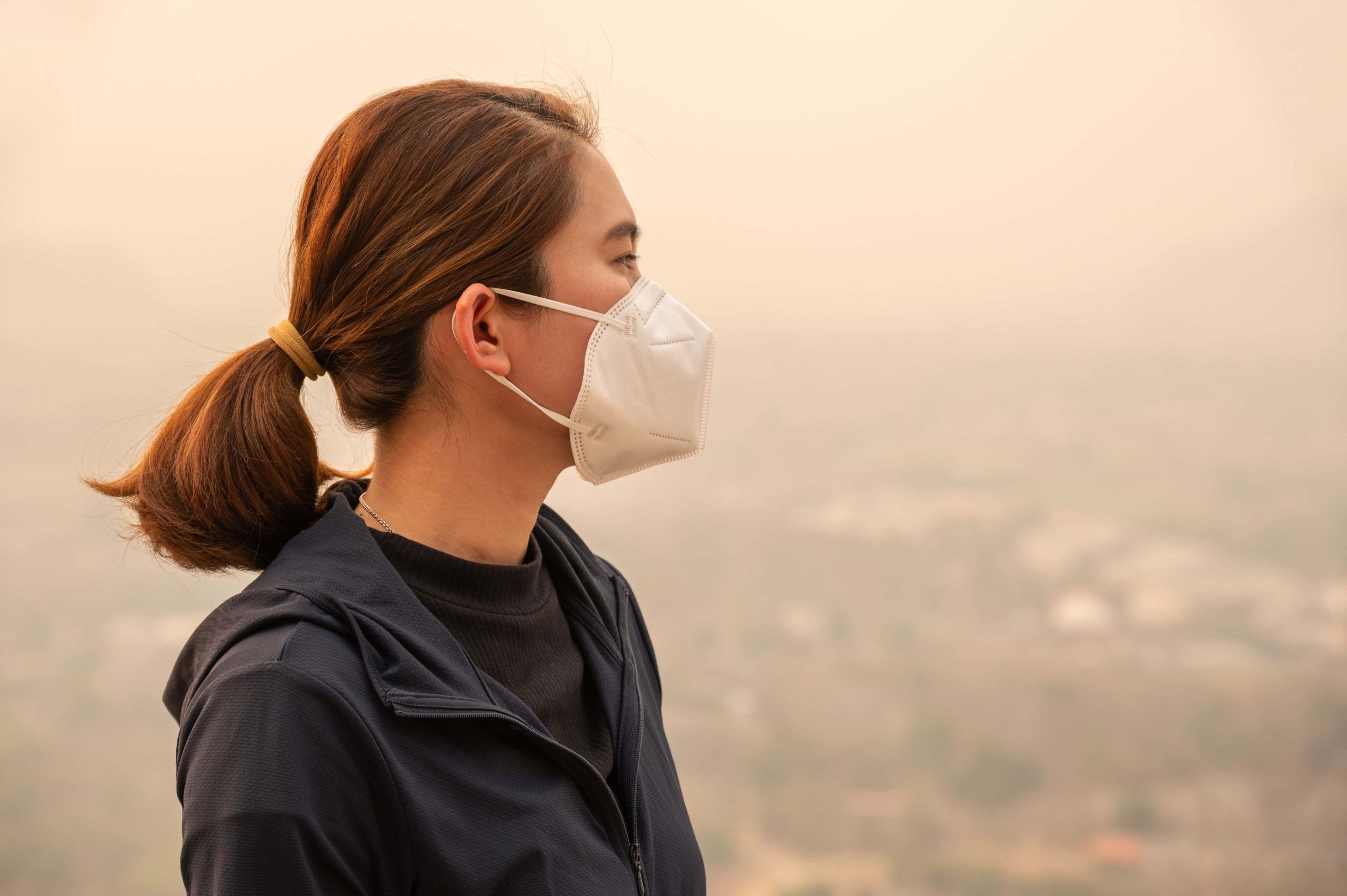
Two things matter: the mask has to seal against your face, and it has to contain a real particulate filter. An N95 is the benchmark most people recognize, and it’s widely available and inexpensive. There are also purpose-built cycling and sport masks made for this, and the ones with certified particulate filters do the job. What doesn’t work is anything loose. Neck gaiters, bandanas and cloth face coverings don’t create a seal, so they don’t meaningfully filter fine particles, even though you see them everywhere on smoky days.
When a Mask Is Worth It
There’s no universal number. It depends on your health more than the reading.
Under 100, most healthy adults can go about their normal outdoor activity.
Between 100 and 150, labeled “unhealthy for sensitive groups,” anyone with asthma, COPD or heart disease, anyone pregnant, adults over 65 and young children should consider shortening the outing or wearing a properly fitted particulate mask for extended time outside.
Over 150, a properly fitted mask is reasonable for anyone doing sustained exertion outdoors, and higher-risk people should move the activity indoors.
Bottom Line
Nobody is staying inside all summer, and that isn’t the point. Check before you head out, check again if you’re going to be out for a while, and know whether you’re dealing with ozone or smoke. That matters most if you or someone in your household has a heart or lung condition.
That’s the kind of thing we cover inside It’s My Health: articles, short videos, and direct access to Dr. G’s medical perspective on the health questions people actually have. Worth becoming a member.
Stay curious and thrive,
Dr. G
Get the next IMH Perspective in your inbox.